




Cleopatra VII is often remembered for her beauty and legendary stories, but her true legacy lies in her intellect and political prowess. Far from a mere seductress, her mastery of diplomacy, strategy, and cultural insight allowed her to navigate a tumultuous era dominated by Roman expansion. Did her influence stem from her sharp mind, multilingual skills, and ability to forge powerful alliances with Julius Caesar and Mark Antony? This portrayal reveals her as a formidable scholar-queen, whose leadership was rooted in wisdom, influence, and adaptability. Her story challenges the superficial myths of beauty and romance, emphasizing that true power resides in strategic thinking and cultural diplomacy. Cleopatra’s impact extended beyond her reign, inspiring future leaders to value knowledge, education, and insight as essential tools of influence. Is her enduring legacy a testament to the strength of the mind over mere royal lineage or brute force? Discover how her intellect shaped history’s course.
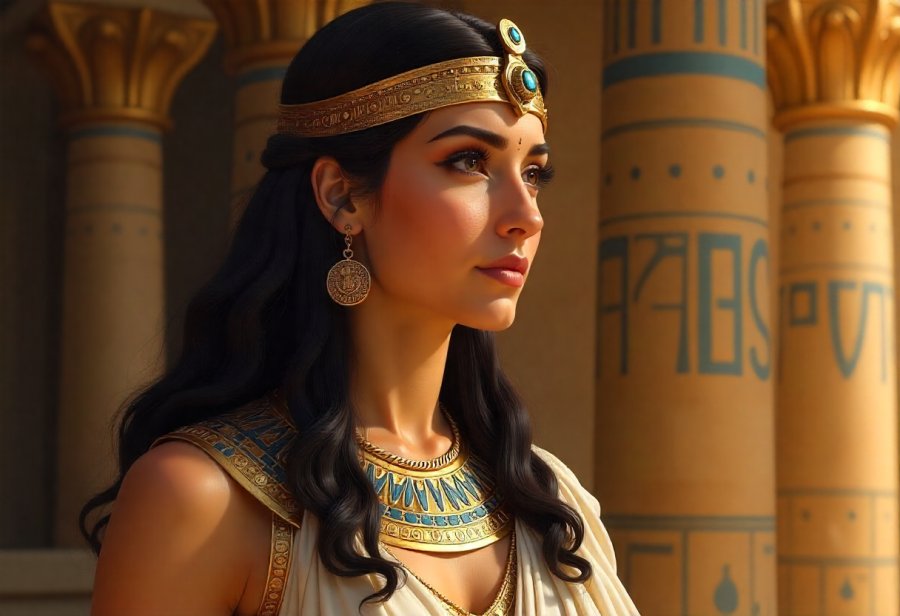
Cleopatra’s True Power Lies in Her Mind and Diplomacy
Cleopatra VII is often remembered for her striking beauty and the dramatic stories that surround her reign, but her true strength was rooted in her sharp mind and keen political instincts. She wasn’t just a figure of allure; she was a master of influence and diplomacy, navigating the treacherous waters of ancient power with remarkable skill. Her leadership was defined by intelligence, strategic thinking, and an ability to inspire loyalty—traits that allowed her to hold onto her throne in a time of great upheaval.
As the last active ruler of Egypt, Cleopatra faced a world where the old order was collapsing and new imperial powers were rising. Rome’s expansion threatened her kingdom’s independence, forcing her to rely on her wit and diplomatic finesse rather than brute force. Her ability to form alliances with influential Roman figures like Julius Caesar and Mark Antony was driven by a deep understanding of political leverage. She knew that influence in her era was won through persuasion, knowledge, and strategic timing rather than military might or royal lineage.
What truly set Cleopatra apart was her mastery of statecraft. She understood that leadership required more than inheriting a throne; it demanded continuous negotiation, cultural insight, and quick adaptability to changing circumstances. Her multilingual talents—reportedly speaking several languages fluently—enabled her to communicate directly with foreign dignitaries, breaking down barriers that might have otherwise limited her influence. Her education in rhetoric, sciences, and philosophy empowered her to engage with her advisors and rivals on equal footing, giving her a strategic edge in a turbulent world.
Many view Cleopatra through the lens of her legendary beauty and romantic entanglements, but her legacy is far more complex. She was a strategic thinker who saw her role as a ruler as a form of diplomacy and influence, not just a royal title. Every decision she made was rooted in a deep understanding of power dynamics, from consolidating her authority within Egypt to navigating the international stage. Her intelligence was her greatest weapon, allowing her to outmaneuver her enemies and forge alliances that prolonged her reign despite overwhelming odds.
By focusing on her intellectual and political mastery, we gain a richer perspective on Cleopatra—one that moves beyond romanticized myths to recognize her as a formidable leader. Her story serves as a reminder that true power often resides in influence, insight, and the ability to adapt. Cleopatra’s legacy endures because she understood that leadership rooted in knowledge and strategic thinking can shape history, making her a timeless example of how the strength of the mind can outshine even the most glamorous illusions of beauty.

Egypt’s Turbulent Realm: Heritage, Politics, and Her Strategic Edge
During Cleopatra’s reign, Egypt’s political landscape was marked by a delicate balance of tradition and upheaval. The country had recently emerged from the decline of the Ptolemaic dynasty, a Macedonian Greek ruling family that had seized control after Alexander the Great’s empire fragmented. This heritage infused Egypt’s governance with Hellenistic customs—rich court intrigue, diplomacy, and a focus on arts and sciences—while also clashing with the deep-rooted religious and cultural traditions of the native Egyptian population. The result was a society navigating dual identities: one rooted in ancient Egyptian spirituality and customs, and the other influenced by Greek political practices and philosophical ideals.
Egypt’s strategic position along the Mediterranean made it a prize coveted by larger empires eager to dominate the region. Rome’s rapid expansion brought increasing pressure on Egypt’s independence, transforming it into a pawn in the imperial game. Cleopatra inherited this volatile environment, where alliances shifted swiftly, and internal power struggles often turned deadly. Her Macedonian Greek background provided her with a diplomatic toolkit rooted in Hellenistic traditions—an advantage in navigating the complex web of alliances and rivalries that defined her world. Yet, she also had to maintain her legitimacy among Egyptians who still revered their ancient gods and traditions, making her leadership a nuanced dance of cultural diplomacy.
Born around 69 BCE in Alexandria, Cleopatra’s education set her apart from many of her contemporaries. She was well-versed in rhetoric, philosophy, sciences, and multiple languages—including Greek, Egyptian, and Latin. Her scholarly pursuits were not merely personal interests but strategic tools that enhanced her diplomatic acumen. Fluent communication with foreign dignitaries allowed her to negotiate directly, bypassing intermediaries and shaping perceptions on her terms. Her intellectual foundation gave her a distinct edge in an era where influence often depended on knowledge, persuasion, and cultural finesse.
Her accession to power followed a turbulent period marked by internal conflict after her father, Ptolemy XII,’s death. Her younger brother, Ptolemy XIII, co-ruled with her but prioritized court rivalries over stability, creating internal chaos. Meanwhile, external threats grew as Roman ambitions encroached further into Egyptian affairs. Cleopatra recognized that survival depended on forming strategic alliances, which led her to seek out powerful Roman figures like Julius Caesar. Her decision to align with him was bold—a calculated move rooted in her understanding of regional politics and her desire to secure her throne amid the shifting tides of empire.
Throughout her reign, Cleopatra’s mastery of politics was evident in how she balanced internal governance with external diplomacy. Her ability to adapt swiftly to changing circumstances was a hallmark of her leadership. She skillfully used her education, languages, and cultural insights to influence key figures and sway alliances in her favor. Her diplomatic finesse extended beyond mere negotiation; it involved reading her enemies’ motivations, timing her moves precisely, and leveraging her knowledge of different cultures to reinforce her authority. This strategic agility kept her in power despite overwhelming odds and turbulent times.
In essence, Cleopatra’s background—both as a Macedonian Greek princess and an Egyptian ruler—shaped her approach to leadership. She understood that influence stemmed from a blend of cultural understanding, intellectual prowess, and strategic thinking. Her ability to navigate the complexities of her world, forging alliances while respecting her diverse cultural landscape, made her a formidable figure whose legacy endures. Cleopatra exemplifies how mastery of political nuance and cultural diplomacy can define a ruler’s impact, transcending generations and redefining what it means to lead with both mind and heart.
The Sharp Mind Behind the Throne: Cleopatra’s Diplomatic and Strategic Genius
Cleopatra’s leadership was defined as much by her sharp intellect and diplomatic finesse as by her royal title. She understood that influence in her turbulent world came from persuasion, strategic relationships, and cultural insight—not just the power of her lineage. Her mastery of statecraft was evident in how she carefully crafted her moves, always aware that understanding her enemies’ motivations and timing her actions were crucial for survival and success.
Her diplomatic skill shone brightest in her relationships with powerful Roman figures like Julius Caesar and Mark Antony. Cleopatra knew her future depended on forging alliances that aligned with her long-term goals. She used her intelligence, cultural knowledge, and language skills to persuade and influence these formidable men. Whether through subtle negotiations, symbolic gestures, or direct communication, she demonstrated a rare ability to shape perceptions and sway influential figures to her side.
Strategic thinking was at the core of her leadership style. Cleopatra recognized early that her authority was fragile and needed constant reinforcement through adaptable tactics. When faced with internal rebellions or external threats, she combined military strength with cultural diplomacy and personal influence. Her alliance with Julius Caesar, a gamble that paid off, secured her throne and gained Roman support. Later, her partnership with Mark Antony was another calculated move aimed at expanding her influence and protecting Egypt’s independence amid Rome’s civil unrest.
What set Cleopatra apart was her ability to anticipate her enemies’ moves and think several steps ahead. Her extensive education in rhetoric, sciences, and philosophy equipped her with tools to craft compelling arguments and negotiations. She integrated her scholarly background with practical political instincts, making her a formidable strategist capable of wielding influence across different cultural and political spheres. Her multilingual talents allowed her to communicate directly with diverse leaders, further amplifying her impact.
Her leadership exemplifies how influence rooted in intelligence, cultural understanding, and strategic foresight can outlast brute force or superficial charm. Cleopatra knew that perception was as powerful as reality. Her ability to read opponents and adapt her approach kept her ahead of her enemies and helped her maintain stability during periods of chaos. Her mastery of diplomacy and strategy made her a lasting symbol of leadership driven by insight and finesse.
Throughout her reign, Cleopatra’s influence demonstrated that leadership is about shaping perceptions and forging lasting alliances, not just wielding power. Her intellectual strengths and cultural savvy allowed her to navigate Egypt’s volatile political landscape with remarkable agility. By leveraging her education, language skills, and diplomatic acumen, she turned influence into a formidable weapon—one that secured her legacy and redefined what it meant to lead with a sharp mind.

Legacy of Wisdom: How Cleopatra’s Intelligence Continues to Inspire Leadership
Cleopatra’s intellectual strengths have left a lasting imprint on history, shaping ideas of leadership that extend far beyond her time. Her ability to combine cultural knowledge, strategic thinking, and diplomatic finesse created a legacy rooted in influence rather than mere royal authority. She showed that wisdom, education, and cultural insight could wield power as effectively as armies or royal bloodlines, setting a high standard for leadership based on influence and intelligence.
Her alliances with Julius Caesar and Mark Antony highlight her strategic brilliance. These partnerships were more than romantic or political gambles; they were carefully calculated moves that shifted regional stability and reshaped the balance of power. Cleopatra understood that enduring influence came from building relationships founded on mutual respect, shared interests, and clever diplomacy—not force alone. These alliances exemplify her skill in navigating complex international waters and reinforcing her position as a master tactician.
Beyond immediate political gains, Cleopatra’s patronage of learning and her support for the Library of Alexandria underscore her belief that knowledge is central to leadership. She was not merely a ruler but a scholar-queen who recognized that cultural and scientific advancements could strengthen her authority. By fostering an environment of intellectual exchange, she elevated Egypt’s reputation as a hub of learning and innovation. Her personal engagement with scholars and scientists reflected her conviction that education could serve as a powerful tool for influence and inspiration.
Her multilingual talents and extensive education gave her a distinct edge in diplomacy. Speaking several languages fluently, she could communicate directly with diverse leaders and envoys, breaking down barriers that often hindered negotiations. This linguistic mastery enabled her to craft nuanced, culturally sensitive strategies, reinforcing her influence across different realms. Cleopatra’s ability to connect authentically across cultures made her a formidable diplomat whose impact extended well beyond her borders.
Her legacy is a testament to how influence rooted in intellectual authority and cultural understanding can shape history. Cleopatra exemplified that leadership driven by insight, foresight, and a deep appreciation for knowledge can be more enduring than brute force or superficial charm. Her mastery of diplomacy, education, and cultural intelligence created a foundation that not only secured her reign but also inspired future generations of leaders who value wisdom and strategic thinking.
Ultimately, Cleopatra’s story challenges stereotypes of female rulers and underscores that true power resides in the mind. Her success in outthinking rivals, forging alliances, and maintaining sovereignty in a male-dominated world proves that influence built on understanding, education, and cultural finesse is the most lasting kind. Her life offers a timeless lesson: leadership rooted in insight and foresight often outshines superficial allure or military might, reminding us that the most influential leaders are those who lead with their minds as much as with their crowns.