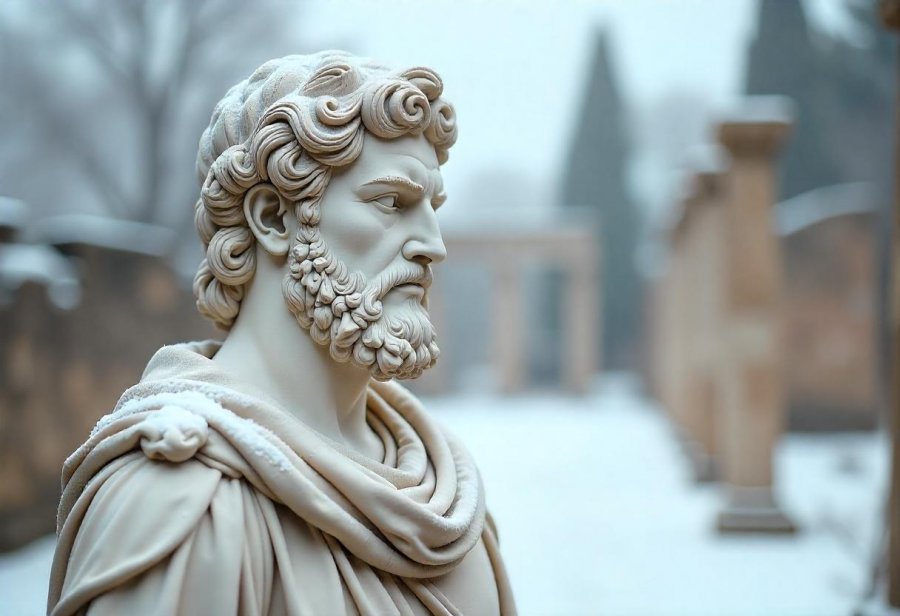




Isaac Newton’s relentless curiosity transformed our understanding of the universe, turning early observations into groundbreaking theories. From dismantling mechanical devices as a boy to developing the laws of motion and universal gravitation, his insatiable desire to uncover natural laws reshaped science. But what drove this genius? His innovative experiments with light, mathematics, and motion—coupled with unwavering perseverance—laid the foundation for modern physics and calculus. Newton’s methods, emphasizing empirical evidence and mathematical rigor, not only explained celestial and terrestrial phenomena but also set enduring standards for scientific inquiry. Today, his influence underpins everything from space exploration to technological innovations, reminding us that curiosity is the engine of progress. As science ventures into new frontiers—artificial intelligence, quantum physics—his legacy prompts a vital question: how can relentless questioning and disciplined exploration continue to propel humanity forward in an ever-changing world?
Unveiling Newton’s Early Curiosity and Humble Beginnings
Isaac Newton’s story begins in a small English village, where his curiosity about how things work was evident from a young age. Even as a child, he enjoyed taking apart mechanical devices and observing nature’s patterns, driven by an innate desire to understand the world around him. His humble beginnings didn’t hinder his inquisitiveness; instead, they fueled a relentless drive to uncover the principles behind everyday phenomena.
Growing up with limited resources, Newton’s self-motivation and keen observation set him apart. He spent hours experimenting with prisms, exploring colors, and pondering the motion of objects—activities that laid the groundwork for his future scientific pursuits. His environment encouraged questioning and hands-on learning, fostering a habit of curiosity that would become central to his approach to discovery.
Newton’s early interests centered on understanding motion, light, and mathematics. He was captivated by the idea that natural events could be explained through simple, universal laws. His experiments with prisms revealed the spectrum of white light, while his fascination with movement led him to develop mathematical tools to describe change and interaction. These explorations showed a mind eager to find order amid complexity.
What set Newton apart was his refusal to accept superficial explanations. Instead, he pushed himself to observe more closely, think more deeply, and experiment more thoroughly. His relentless curiosity drove him to question established ideas, ultimately leading to revolutionary insights. Every discovery emerged from a desire to see beyond surface appearances and grasp the underlying mechanics of the universe.
His story demonstrates that curiosity isn’t limited by background or circumstance. Newton’s early passion for understanding motion, light, and nature’s laws grew into groundbreaking theories that still shape science today. His journey from a curious boy to one of history’s greatest scientists highlights the power of a questioning mind, perseverance, and a relentless quest for knowledge. It’s a reminder that the spark of curiosity, when nurtured, can lead to discoveries that change the world.
Foundations of Genius: Newton’s Childhood and Education
Isaac Newton was born in 1643 in Woolsthorpe, a small village in England, into a modest farming family. From a young age, he showed an innate curiosity about how things worked, often dismantling mechanical devices and observing nature with keen interest. His early fascination with motion, light, and machinery set the stage for a lifelong pursuit of understanding the natural world.
Despite limited resources, Newton’s self-motivation and sharp mind pushed him to explore beyond his environment. He spent countless hours experimenting with prisms, uncovering how white light splits into a spectrum of colors, and pondering the movement of objects around him. These childhood activities weren’t mere hobbies but foundational steps toward his future scientific breakthroughs.
His early education at local schools reinforced his inquisitive nature. Newton quickly distinguished himself through his ability to grasp complex ideas and his relentless desire to learn. He believed that natural phenomena could be explained through simple, universal laws—a conviction that would shape his entire scientific approach.
Newton’s fascination with mathematics grew alongside his interest in physics. He sought to develop tools to describe the motion and changes he observed. His experiments with prisms and light expanded into developing mathematical techniques, like calculus, which allowed him to analyze how objects move and interact with unprecedented precision. These pursuits were driven by a desire to find order and explanation behind seemingly complex phenomena.
Throughout his formative years, Newton rejected reliance solely on philosophical speculation. Instead, he emphasized empirical evidence and hands-on experimentation. His approach was characterized by keen observation, rigorous testing, and a willingness to challenge existing ideas—traits that would define his revolutionary scientific career.
His early experiences reveal a mind that combined curiosity with determination. Newton’s passion for understanding motion, light, and the universe’s underlying principles grew from simple questions into groundbreaking theories. These foundational interests laid the groundwork for his later contributions, demonstrating how curiosity and perseverance can transform humble beginnings into scientific history.
Transforming Science: Newton’s Theories and Lasting Impact
Isaac Newton’s scientific contributions have left an indelible mark on our understanding of the universe, transforming natural philosophy into a precise, mathematical science. His three laws of motion provided a clear framework for explaining how objects move and interact, from the fall of an apple to the orbits of planets. These principles made physics predictable and accessible, shifting the perception of nature from chaos to order. Alongside this, Newton’s law of universal gravitation unified celestial and terrestrial phenomena, revealing that the same force governs both falling objects and planetary motion. This elegant insight laid the groundwork for a comprehensive picture of the cosmos that remains influential today.
Supported by meticulous experiments and rigorous mathematical reasoning, Newton’s theories withstood the test of time. His prism experiments demonstrated that white light is composed of a spectrum of colors, advancing the field of optics significantly. The development of calculus—a revolutionary mathematical tool—allowed scientists to describe change and motion with extraordinary precision. These milestones weren’t isolated; they marked a paradigm shift towards empirical, evidence-based science. Newton’s ability to combine observation, experimentation, and mathematical proof created a foundation that others could build upon, fostering a continuous evolution of scientific thought.
Newton’s ideas didn’t just explain natural phenomena; they redefined how science approached the unknown. His laws provided a framework for further inquiry, inspiring generations of scientists to test, refine, or challenge his work. While his laws work remarkably well in most everyday situations, they have limitations—such as at very high speeds or quantum scales—that prompted Einstein and others to expand upon his theories. Nevertheless, the core principles he established remain central to physics, guiding modern research and technological innovation. His emphasis on empirical evidence and mathematical clarity set enduring standards for scientific rigor.
The influence of Newton’s work extends beyond physics into astronomy, engineering, and philosophy. His insights into motion and gravity changed the way we perceive the universe—from a mysterious, unpredictable realm to a system governed by natural laws that can be understood and predicted. His relentless questioning and experimental approach fostered a culture of inquiry that continues to inspire scientists today. Newton’s methods—challenging assumptions, rigorous testing, and mathematical modeling—remain a blueprint for scientific progress, encouraging curiosity-driven discovery at every level.
Newton’s legacy is a testament to the power of relentless curiosity and disciplined inquiry. His groundbreaking theories revolutionized science and set a standard for future generations. As new fields emerge and existing ones evolve, his principles continue to serve as a foundation for innovation. The pursuit of understanding, fueled by curiosity and backed by evidence, remains at the heart of scientific advancement. Newton’s story reminds us that the drive to ask questions and seek answers is what truly propels humanity forward, shaping our ever-expanding knowledge of the universe.
From Theory to Practice: Newton’s Legacy in Modern Science and Technology
Newton’s curiosity-driven approach and groundbreaking theories continue to shape the modern landscape of science and technology in profound ways. His laws of motion form the backbone of countless engineering feats, from designing safer vehicles to guiding the precise trajectories of satellites. Space agencies rely on these principles for rocket launches, planetary exploration, and satellite deployment, demonstrating how fundamental curiosity can underpin complex technological systems. Similarly, everyday safety features like airbags and crash sensors are rooted in Newtonian physics, illustrating how his insights directly influence our daily lives.
Beyond physics, Newton’s development of calculus remains a cornerstone across scientific disciplines. Its power to model dynamic systems—climate change, biological processes, financial markets—has revolutionized research and innovation. By quantifying change and predicting interactions, calculus enables scientists to build increasingly accurate simulations of real-world phenomena. This mathematical tool, born from Newton’s relentless curiosity, continues to propel breakthroughs in fields that once seemed beyond reach, fueling progress and discovery.
While Newton’s theories have proven remarkably robust, they are not without limits. At speeds approaching that of light or on quantum scales, classical physics breaks down, requiring Einstein’s relativity or quantum mechanics. These advancements extend and refine Newton’s work, but they stand on the foundation he laid. His core principles serve as a familiar compass, guiding scientists as they push into new frontiers. This evolution underscores how curiosity fuels not just discovery but also the ongoing refinement of knowledge.
Encouraging curiosity today is vital for ongoing innovation. Educational initiatives that promote hands-on experimentation and questioning cultivate the same inquisitive mindset Newton exemplified. When students and researchers ask “what if” and challenge existing ideas, they open pathways to breakthroughs. Creating environments that celebrate exploration and tolerate failure fosters the kind of persistent curiosity that drives scientific progress.
Access to resources plays a crucial role in nurturing this curiosity. Digital tools, online platforms, telescopes, microscopes, and open data make exploration more accessible than ever before. These tools empower individuals to investigate the natural world firsthand, much like Newton did with simple experiments. When people have the means to explore, they’re more likely to develop the persistent questioning that leads to innovation and new understanding.
Newton’s legacy extends beyond specific theories; it embodies a mindset of relentless curiosity, rigorous experimentation, and mathematical rigor. In an era of rapid technological growth—artificial intelligence, space exploration, biotechnology—this spirit remains essential. It reminds us that progress begins with simple questions and a willingness to explore the unknown. Embracing this mindset ensures that discovery continues to drive humanity forward, inspired by Newton’s example.
Fostering a culture that values questioning and exploration is key to sustaining this legacy. Investing in education, providing access to advanced tools, and encouraging open-minded inquiry create fertile ground for future breakthroughs. As we face global challenges—climate change, health crises, ethical dilemmas—the need for curious minds grows ever more urgent. Newton’s example shows that curiosity, paired with perseverance, can transform challenges into opportunities and shape a better future for all.
Looking Ahead: The Future of Curiosity and Discovery Inspired by Newton
Newton’s story reminds us that relentless curiosity, paired with a willingness to challenge the status quo, fuels scientific progress. His groundbreaking theories didn’t come from accepting facts at face value but from asking deeper questions and pushing beyond what was known. This mindset transformed natural philosophy into a precise, mathematical science and set a standard for inquiry that continues to inspire today. Newton’s example shows that curiosity isn’t just a trait of individual geniuses; it’s a powerful force that, when nurtured, can revolutionize entire fields.
Looking to the future, the spirit of curiosity remains essential as science ventures into uncharted territories. Breakthroughs in artificial intelligence, quantum computing, space exploration, and biotechnology all start with bold questions and a desire to understand the unknown. As these fields evolve rapidly, asking “what if” and “why not” becomes crucial—pushing us to explore new frontiers and redefine what’s possible. Maintaining this wonder-driven approach amid complex data and advanced technology is vital to continuing the legacy of discovery.
Emerging disciplines like nanotechnology and genetic editing are expanding our capabilities and raising new ethical questions. Navigating these innovations requires a curious mindset that questions assumptions and seeks deeper understanding. Newton’s legacy demonstrates that progress begins with simple questions and a persistent drive to uncover the universe’s truths—even as our tools and knowledge grow more sophisticated. His example encourages us to stay curious, open-minded, and willing to challenge the known.
Fostering curiosity today involves creating environments where exploration is valued and supported. Schools, research institutions, and companies can cultivate this mindset through hands-on experimentation, collaboration, and embracing failure as part of growth. When individuals are encouraged to ask “what if,” they carry forward Newton’s drive—helping ensure that discovery remains at the heart of scientific advancement. Widespread access to digital tools and open data further fuels this curiosity, enabling more people to participate in the pursuit of understanding.
Newton’s legacy is rooted in a mindset that combines questioning, rigorous experimentation, and mathematical rigor. In a world increasingly driven by technological innovation, artificial intelligence, and space exploration, this spirit of curiosity remains more relevant than ever. It reminds us that progress begins with simple questions and a willingness to explore the unknown. By maintaining this mindset, we can continue to push boundaries and unlock new possibilities, just as Newton did centuries ago.
His example shows that curiosity is the engine of discovery—an unstoppable force that transforms ideas into breakthroughs. As humanity faces global challenges like climate change and health crises, the need for curious minds grows even more urgent. Cultivating a culture that values questioning, experimentation, and lifelong learning is key to shaping a better future. Newton’s story demonstrates that perseverance and curiosity can turn uncertainties into opportunities, inspiring generations to come.
The pursuit of understanding is timeless. Newton’s legacy proves that when curiosity is paired with discipline and rigor, it can lead to discoveries that reshape our view of the universe. Embracing this spirit will be essential as we continue to explore, innovate, and confront the unknown. The future of science depends on minds willing to ask “what if,” challenge assumptions, and seek deeper truths. By doing so, we carry forward Newton’s extraordinary example—driving progress, expanding horizons, and transforming the world for generations ahead.